If an older sibling got a Florida permit, most of what they remember is now wrong. The course is different and longer, translated tests are gone, and plenty of websites (including some DMV prep sites) still describe the 2024 process.
We rebuilt the steps from FLHSMV's own pages. Where those pages disagree with each other, we say so.
What changed, and when
| Date | Change | Who it affects |
|---|---|---|
| August 1, 2025 | 6-hour DETS course replaces the 4-hour TLSAE for applicants under 18 who have never held a license | Every new teen driver |
| February 6, 2026 | All knowledge and skills exams given in English only; no interpreters, no translated tests | Every applicant, all license classes |
FLHSMV announced the language change on January 30, 2026, and it covers oral exams too. If your teen studies best in another language, study the content in that language first and then switch to English practice for the last few weeks. Florida's test vocabulary ("right-of-way," "yield," "solid yellow line") needs to be familiar on sight.
DETS or TLSAE: which course you take
| Applicant | Course | Length |
|---|---|---|
| Under 18, never licensed anywhere | DETS | 6 hours, online or in person |
| Under 18, took TLSAE before August 1, 2025 | TLSAE certificate accepted for one year from completion, then DETS | n/a |
| Under 18, already held a Florida learner's license before August 1, 2025 | No DETS needed | n/a |
| Under 18, moving to Florida with a valid out-of-state license | Exempt from DETS | n/a |
| 18 or older, never licensed | TLSAE | 4 hours |
| Student in an FDOE driver education class (1900300 or 1900310) or a DELAP course | That class can stand in for DETS | Per school |
As of November 2026, the TLSAE grandfather window for teens has closed for anyone who finished TLSAE before August 1, 2025. A teen who took TLSAE in mid-2025 and never applied needs DETS now.
One caution: FLHSMV's own "Class E Knowledge Exam" page still says customers must complete TLSAE before applying. Its DETS page and teen licensing page say DETS for under-18s. The DETS and teen pages are the ones written for under-18s and match the August 2025 law change, so follow them. Don't let a teen take TLSAE because one page said so.
The permit, step by step
- Be at least 15.
- Finish DETS (or TLSAE if 18 or older), and keep the completion record.
- Get the Parental Consent Form signed by a parent or legal guardian, notarized or signed in front of an examiner. Step-parents can't sign unless they've legally adopted the child.
- Study and pass the Class E knowledge exam, with a score of 80%. It covers traffic laws, safe driving practices and signs. Use our Florida practice test, Florida numbers worth memorizing and the road signs that show up on permit tests.
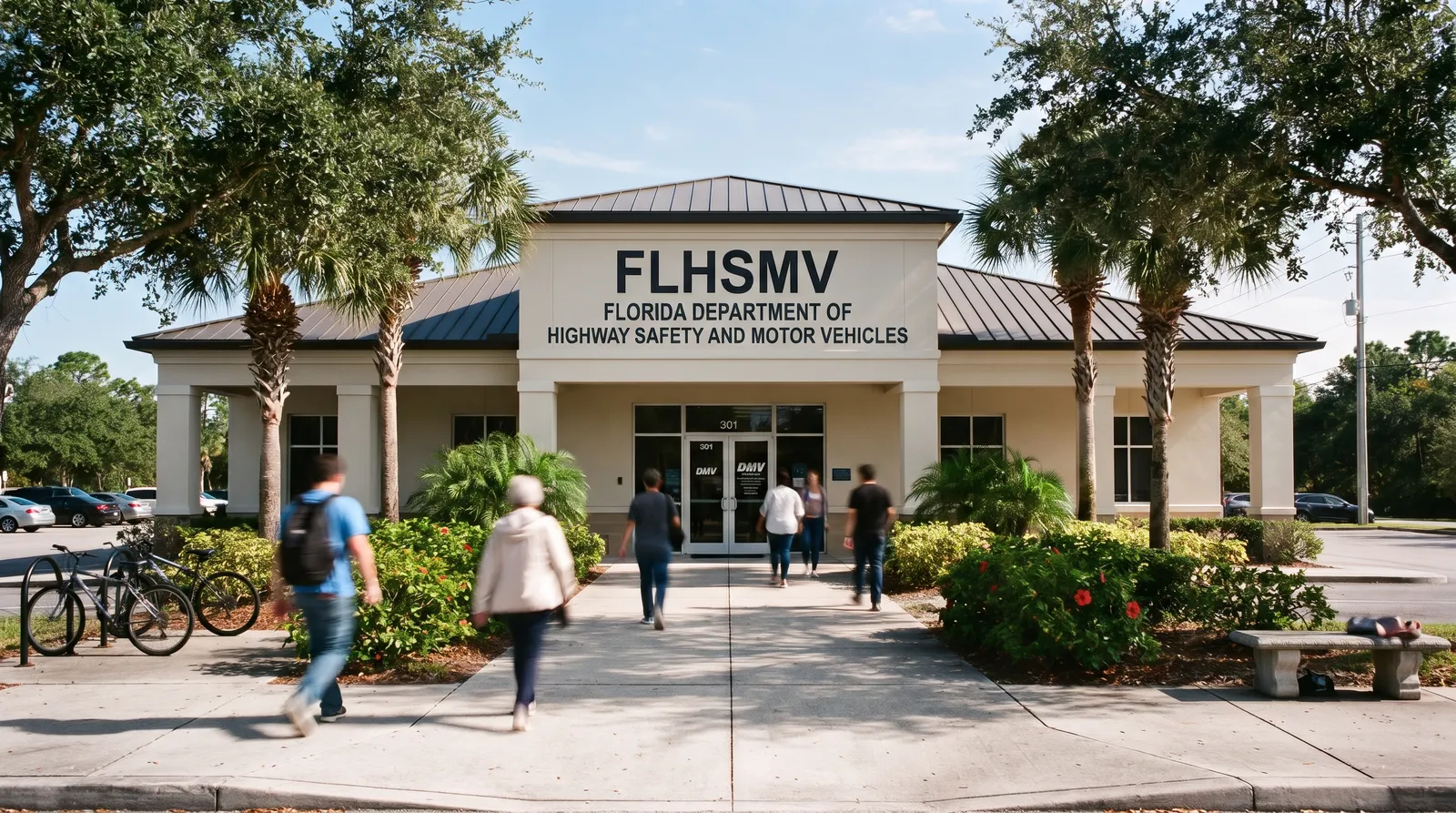
- Visit a service center for the vision and hearing tests, with documents to bring: proof of identity, Social Security number and residential address.
- Leave with the learner's license.
If you'd rather read the source text, we've got the Florida handbook, broken down by chapter.
Taking the knowledge test online
Florida is one of the few states that lets you take the permit test at home, and only if you're under 18. FLHSMV approves third-party administrators to give it. Our roundup of which states let you test online puts Florida in context.
The online route has three strings attached:
- A Parent Proctoring Form, notarized or signed in front of an examiner, is required.
- English only, like every other Florida exam since February 6, 2026.
- Random re-tests. FLHSMV says that under section 322.56 of the Florida Statutes, anyone who passes through a third-party administrator may be randomly selected for a no-fee mandatory re-test without prior notice. Pass it at the service center and the license is issued. A teen who passed online by guessing has a real chance of being found out at the counter.
Results go to FLHSMV electronically, so you don't bring a printout.
What it costs
| Item | Fee |
|---|---|
| Original Class E, which includes the learner's license | $48 |
| Knowledge retest | $10 |
| Skills retest | $20 |
| Tax collector office service fee, where charged | up to $6.25 |
| DETS, TLSAE, online exam | Set by the provider |
So a teen who passes the first time at a state-run service center pays $48 to the state plus the course and any online test fee. Fail twice and the retests add $20. Florida's fee schedule says veterans don't pay the $6.25 tax collector fee on most of these transactions, which won't apply to a teen but may to an adult learner.
Rules once you have the permit
| Rule | Learner's license |
|---|---|
| Who must be in the car | A licensed driver 21 or older, at all times |
| Hours, first 3 months | Daylight only |
| Hours, after 3 months | Until 10 p.m. |
| How long you must hold it | 12 months, or until age 18, whichever comes first |
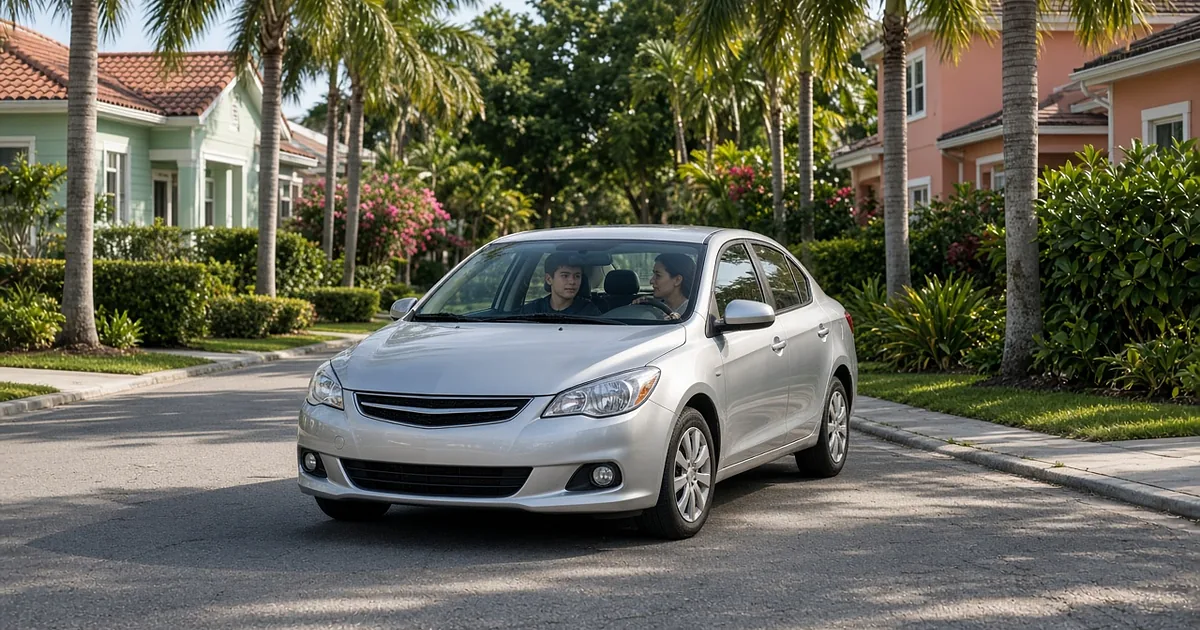
| Practice required | 50 hours, at least 10 at night, certified by a parent, guardian or responsible adult 21+ |
The 50-hour form is signed by an adult, not checked against any log. Keep a real log anyway (FLHSMV publishes a practice sheet), because the 10 night hours are hard to fit in if you start counting in month eleven.
From permit to license
At 16, with 12 months on the permit, the 50 hours certified and no moving-violation convictions for that year (one is tolerated if adjudication was withheld), your teen can take the Class E driving skills test. The test car needs valid registration and insurance and has to pass the examiner's basic safety check. Here's how the Florida road test runs.
Adults are different. The 12-month hold ends at 18, so an adult who passes the knowledge exam can go on to the driving test without waiting a year.
Mistakes that cost families a second trip
- Booking TLSAE for a 15-year-old because an old page or an older sibling said so.
- A step-parent signing the consent form without having adopted the child.
- Skipping the notary on the Parent Proctoring Form for an online test.
- Practicing only in a translated app and meeting English test wording for the first time on test day.
- Assuming an online test means no office visit. The vision and hearing tests, the documents and the photo still happen at a service center.
And if the test doesn't go well, here's what happens if you fail: in Florida, a $10 retest.
What to do next
- Confirm which course applies using the table above, and book DETS.
- Get the consent form notarized while you're at it.
- Run the Florida practice test in English until scores sit comfortably above 80%.
- Choose online (under 18 only) or in office, and book.
Frequently asked questions
Do I need DETS or TLSAE for a Florida learner's permit?
Under 18 and never licensed: DETS, a 6-hour course, since August 1, 2025. 18 or older: TLSAE, 4 hours.
Can I take the Florida permit test online?
Yes, if you're under 18, through an FLHSMV-approved third-party administrator, with a notarized Parent Proctoring Form. You can be selected at random for a free re-test at a service center.
Can I take the Florida permit test in Spanish?
No. Since February 6, 2026, every Florida driver license knowledge and skills exam is given in English only, without interpreters.
How much does a Florida learner's permit cost?
$48 for the original Class E, which includes the learner's license. A knowledge retest is $10, and tax collector offices may add up to $6.25.
When can a Florida learner's permit holder drive at night?
Only in daylight for the first three months. After that, until 10 p.m., always with a licensed driver 21 or older.
How we checked this
We read every FLHSMV page below on November 15, 2026, and compared them with the top-ranking permit guides, several of which still describe TLSAE for teens.
- FLHSMV, Driver Education Traffic Safety (DETS): https://www.flhsmv.gov/driver-licenses-id-cards/education-courses/driver-improvement-schools/driver-education-traffic-safety-dets/
- FLHSMV, Licensing requirements for teens and GDL laws: https://www.flhsmv.gov/driver-licenses-id-cards/licensing-requirements-teens-graduated-driver-license-laws-driving-curfews/
- FLHSMV, Class E knowledge exam and driving skills test: https://www.flhsmv.gov/driver-licenses-id-cards/licensing-requirements-teens-graduated-driver-license-laws-driving-curfews/class-e-knowledge-exam-driving-skills-test/
- FLHSMV, Driver license exams to be administered in English only (January 30, 2026): https://www.flhsmv.gov/2026/01/30/flhsmv-announces-driver-license-exams-to-be-administered-in-english-only/
- FLHSMV, Fees: https://www.flhsmv.gov/fees/
- Florida Statutes, section 322.56: https://www.leg.state.fl.us/statutes/index.cfm?App_mode=Display_Statute&URL=0300-0399/0322/Sections/0322.56.html