Here is something most drivers never learn until they are deep into a job search: you can earn the doubles/triples endorsement in any state, but you can only legally pull a triple in about 10 of them.
Where triple trailers are legal
Hover or tap any state on the map below to see its exact rule.
Where triple trailers are legal
10 permitted · 5 limited
Tap a state to see its triple-trailer rule.
Doubles vs. triples: what the difference means
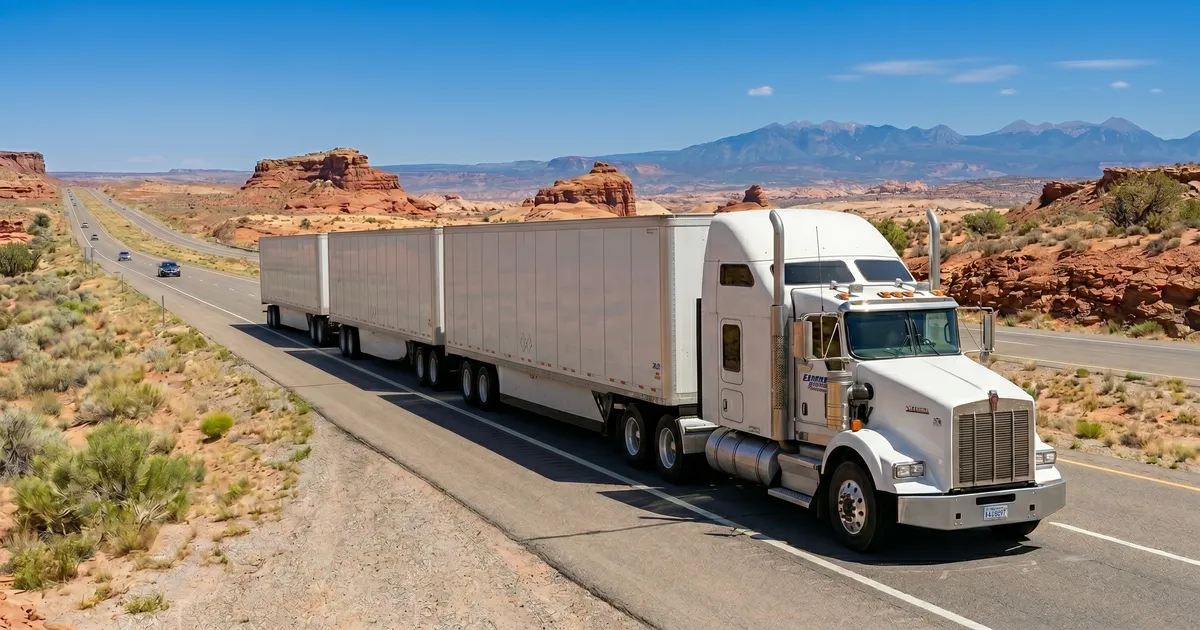
Triple trailers are concentrated in the West, and nearly every state that allows them restricts triples to specific highways, requires a permit, and caps length and weight. Standard twin 28-foot doubles, by contrast, are allowed on the National Highway System in every state. It is the third trailer that is tightly controlled.
What the doubles/triples (T) endorsement covers
What the T endorsement is
The Doubles/Triples endorsement (code T) lets you pull more than one trailer. You earn it with a knowledge test, no separate road test, and it covers coupling and uncoupling multiple trailers, handling, and inspection.
Doubles vs triples
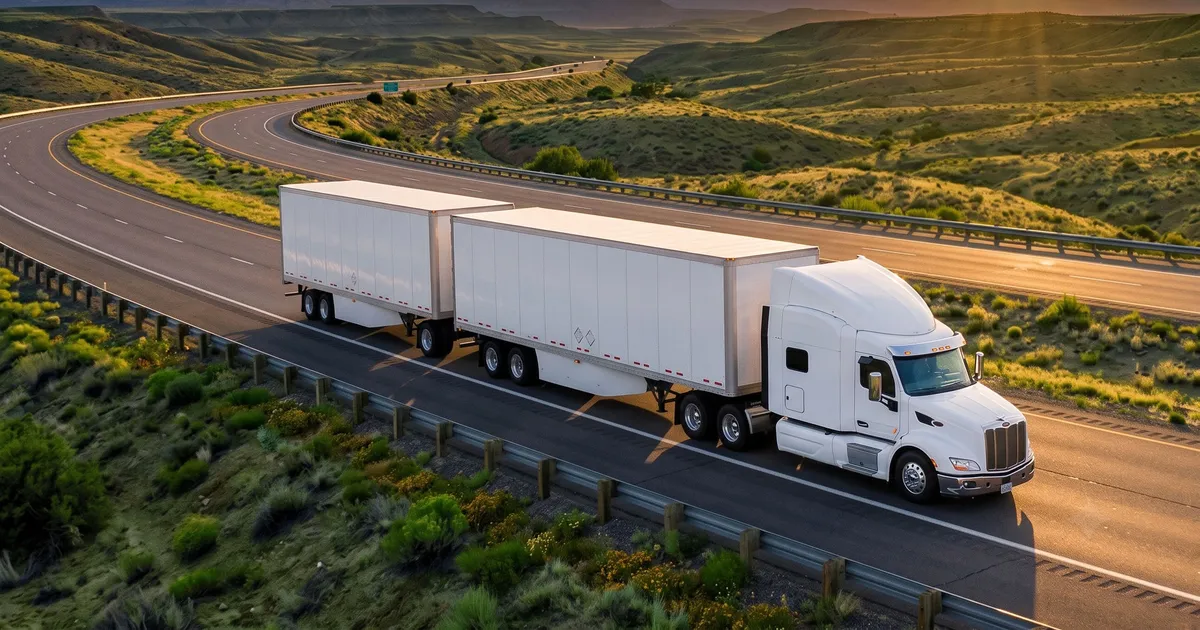
Standard twin 28-ft 'doubles' are allowed on the National Highway System in every state. 'Triples' (three trailers) are a longer combination vehicle (LCV) and are far more restricted, which is what this map is about.
Why handling matters
Multiple trailers amplify the crack-the-whip effect: the last trailer swings much wider and faster than the tractor. Doubles and triples are more prone to rollover and rearward amplification, so smooth steering and extra following distance are essential.
Studying for the T endorsement? The knowledge test is federal, so the content is the same everywhere even though the routes are not. Practice with a free CDL doubles/triples practice test for your state, or with the free CDL prep app.