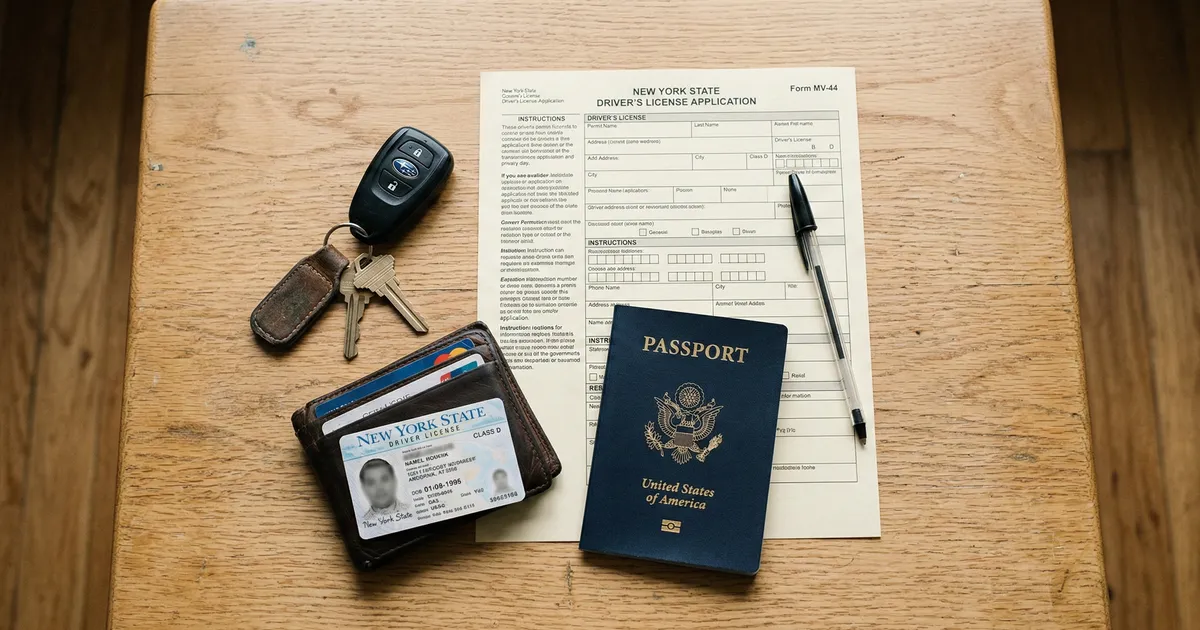
Getting turned away at the DMV because you forgot a document is one of the most frustrating experiences. Here's a complete checklist so you show up prepared.
Required documents (most states)
- Proof of identity: Birth certificate, passport, or permanent resident card
- Proof of Social Security number: Social Security card, W-2, or pay stub showing full SSN
- Proof of residency (2 documents): Utility bill, bank statement, lease agreement, or official mail dated within 60-90 days
- Parental consent (if under 18): Parent or guardian must sign in person or provide a notarized form
REAL ID requirements: If you're applying for a REAL ID-compliant permit or license, you'll need additional documentation. Check your state's DMV website for the specific REAL ID checklist — requirements vary.
Payment
Most DMV offices accept cash, debit cards, and money orders. Some accept credit cards but may charge a processing fee. Few accept personal checks. Bring multiple payment options to be safe.
What you probably don't need
- You typically don't need to bring your own pencil — the DMV provides them or uses a computer-based test
- Study materials aren't allowed in the testing area
- Most states don't require an appointment for the written test (but some do — check first)
Before you go
- Check your state's DMV website for exact document requirements — they vary
- Make sure your documents aren't expired
- Photocopies are usually not accepted — bring originals
- If your name doesn't match across documents (marriage, legal name change), bring proof of the name change
Once your documents are sorted, the only thing left is to study for the test itself.