The doubles and triples endorsement (code T) lets you pull more than one trailer behind a Class A CDL. It is one of the fastest endorsements to add: one knowledge test, no road test, and no federally required training course. This guide covers what the doubles and triples endorsement is, who qualifies, how to get it step by step, what the test covers, what it costs, and whether it is worth it, then points you to a free practice test for your state.
What is the doubles and triples endorsement?
The doubles and triples endorsement, marked with the letter T on your commercial license, authorizes you to pull a combination of more than one trailer. You earn it with a written knowledge test, and it attaches only to a Class A CDL, because a multi-trailer rig is a Class A vehicle. It covers both configurations that give the endorsement its name.
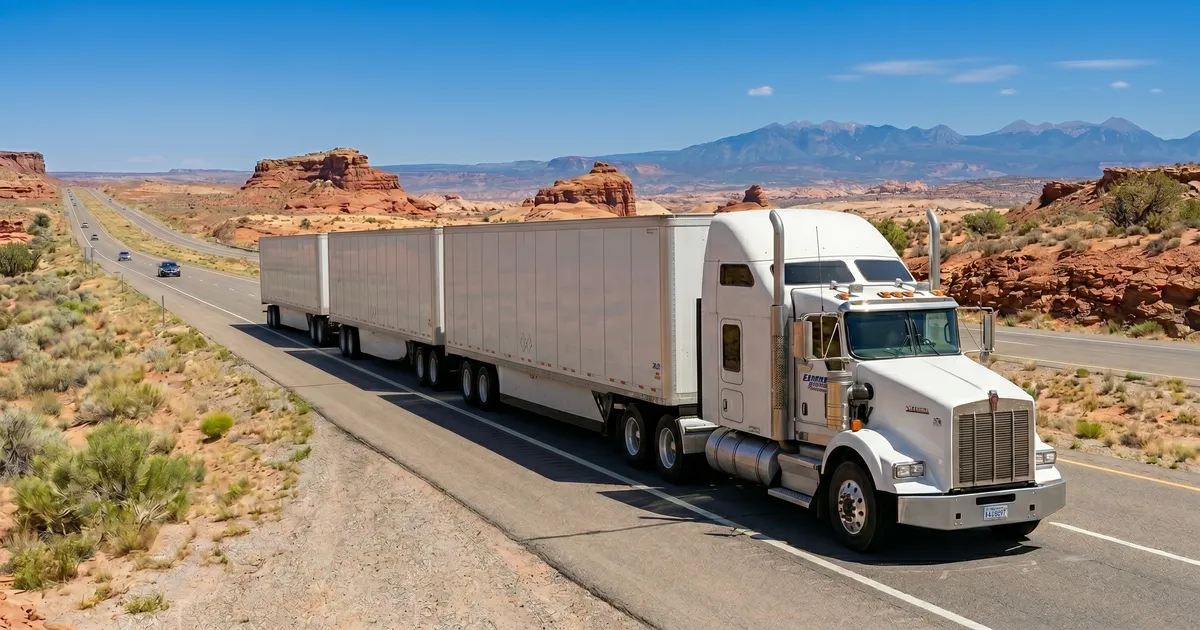
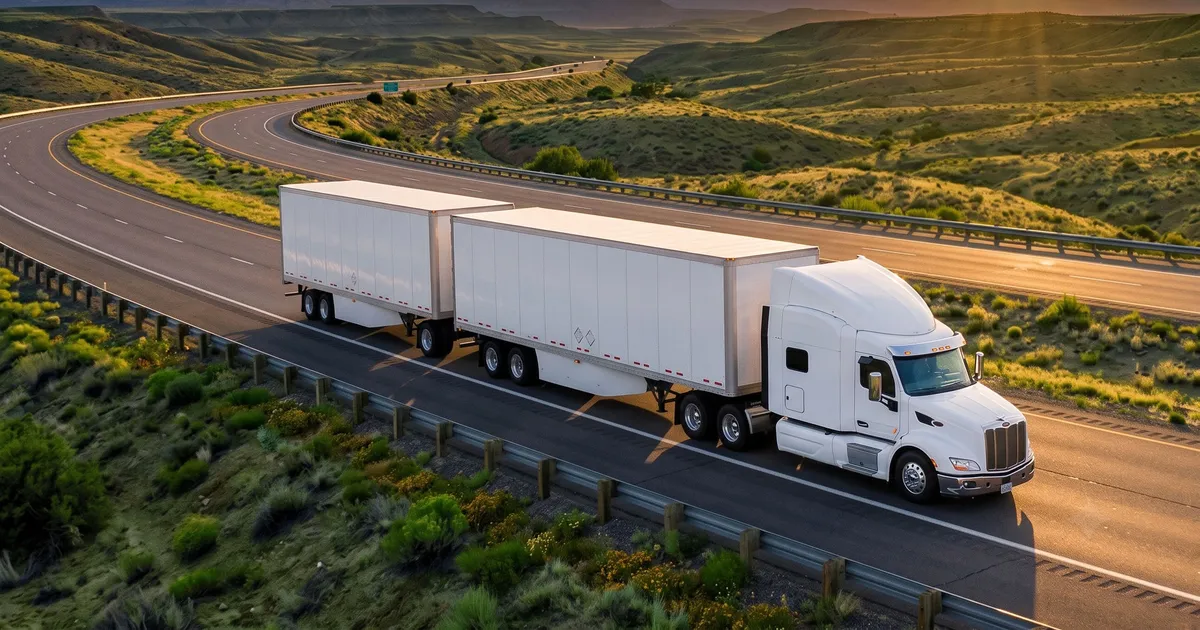
Two shorter trailers behind one tractor. Standard 28-foot doubles are the everyday LTL freight configuration.
Three trailers in one combination. Legal to earn everywhere, but tightly restricted to operate.
The difference matters for where you can drive. Standard 28-foot doubles are allowed on the National Network in every state. Triples are a longer combination vehicle and are far more restricted, which is the catch we cover further down.
Doubles and triples endorsement requirements
The endorsement is available to earn in every state, but there is one hard requirement: a Class A CDL. Here is the full checklist before you sit the test.
How to get your doubles and triples endorsement, step by step
The knowledge test is set by federal rule, so these steps are the same wherever you live. Only the fee, the appointment system, and the triple-route rules change from state to state.
What is on the doubles and triples endorsement test?
Expect roughly 20 multiple-choice questions with an 80% passing score, the FMCSA standard for every endorsement. Because there is no road test, the written exam has to prove you understand the mechanics and the physics of pulling more than one trailer. It leans on three areas.
What the T endorsement is
The Doubles/Triples endorsement (code T) lets you pull more than one trailer. You earn it with a knowledge test, no separate road test, and it covers coupling and uncoupling multiple trailers, handling, and inspection.
Doubles vs triples
Standard twin 28-ft 'doubles' are allowed on the National Highway System in every state. 'Triples' (three trailers) are a longer combination vehicle (LCV) and are far more restricted, which is what this map is about.
Why handling matters
Multiple trailers amplify the crack-the-whip effect: the last trailer swings much wider and faster than the tractor. Doubles and triples are more prone to rollover and rearward amplification, so smooth steering and extra following distance are essential.
How much does the doubles and triples endorsement cost?
The doubles and triples endorsement itself is cheap. Most states add a small endorsement fee of a few dollars to your license, and there is no separate skills-test fee because there is no skills test. It is not on the federal Entry-Level Driver Training (ELDT) list either, so you do not have to pay for a training course before you test. In practice, the biggest cost is your study time, which is why passing the knowledge test the first time is worth a little preparation.
Is the doubles and triples endorsement worth it?
For most Class A drivers, yes. Less-than-truckload (LTL) freight carriers run doubles heavily, and the T endorsement is often required or preferred for those routes and for line-haul work. Because you can add it with a single knowledge test and no road test, the return on a few hours of study is high: it widens the jobs you can take without adding weeks of training. If triples are common in your region, it opens even more specialized, higher-paying runs.
Where you can actually pull triple trailers
Here is the catch. Earning the endorsement is legal anywhere, but operating a triple is legal in only about 10 states, on designated routes, and usually with a separate permit. A 1991 federal freeze locked that map in place. Hover or tap any state below to see its rule.
Where triple trailers are legal
10 permitted · 5 limited
Tap a state to see its triple-trailer rule.
Practice doubles and triples questions for your state
The doubles and triples question pool is federal, so the material is the same in every state. Pick your state below for its endorsement page, or jump straight into a free practice test. States where triples are legal to operate are marked.
Ready to study? Drill coupling, uncoupling, and inspection with a free CDL doubles and triples practice test for your state, or get the free CDL prep app to track every section on your phone.